About digital_culture
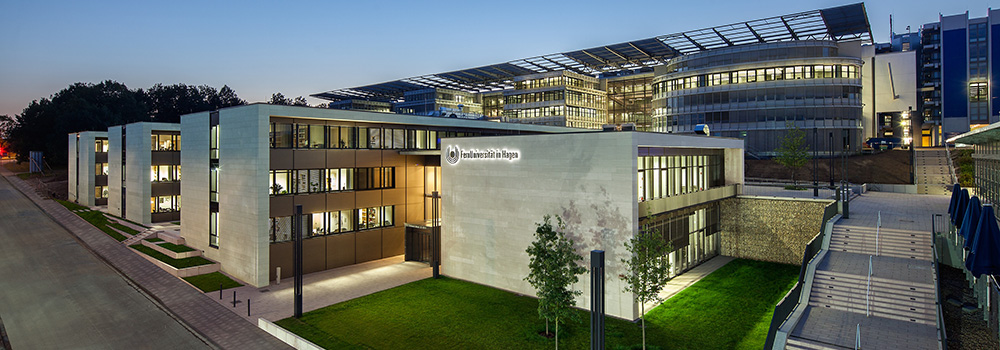 Photo: ©Dirk Matull Fotografie
Objectives and Structure of the Research Cluster digital_culture
Our Identity
Digital Cultures and Social Responsibility
The digital_culture research cluster addresses issues of social responsibility in digital cultures. In doing so, it builds on the FernUniversität’s history as a media university, its associated identity as a university of digital transformation, and its mission to contribute to educational equity. With this in mind, the cluster explores and reflects on the cultural, social, and epistemic dimensions of digital culture without reducing them to their technological and infrastructural aspects. While monitoring and critically assessing ongoing developments in digital transformation, the academic community is expected to describe, analyze, and interpret dynamics within their respective social contexts. In this way, the research cluster helps reinforce the capacity for reflection and action within digital cultures, which is itself a prerequisite for assuming social responsibility.
The term “digital culture” refers to a culture in which the distinction between digital and analog can no longer be clearly drawn. The Hagen approach is also guided by this principle, integrating cultural reflections and digital methods within the context of the digital humanities through interdisciplinary collaboration. The digital_culture research cluster brings together and connects projects focused on digital cultures and methods in research and teaching, and initiates initiatives for societal impact.
Key Themes
Digital Hermeneutics
Digital technologies and infrastructures are fundamentally transforming the practices and processes of meaning-making and understanding by intertwining analog and digital practices. In the process, the role of hermeneutics is changing. It must grapple with shifts in interpretive processes as well as the incomprehensible nature of algorithmic interactions (black boxes). Given that digital systems such as large language models have long been capable of generating text autonomously, we are witnessing shifts in both the locus and in the very concept of authorship involved in the creation of meaning. Viewed in this light, digital hermeneutics is concerned with questions of social responsibility, particularly as the fundamental concepts that underpin our understanding of the world (such as ‘truth’ or ‘reality’) are not only conveyed digitally but are increasingly subject to political contestation. This transformation requires, at the least, a critical examination and analysis of the digital conditions of understanding in research and teaching, with a view to fostering responsible university practice.
Digital Standardization/Normalization
Issues relating to digital standardization concern the alignment of users and technologies with specific standards, as well as the establishment of statistical norms and average values. Socio-technical practices and processes of measurement, classification, comparison and relating have continually redefined the relationship between norms and normality. In digital cultures, the significance of these techniques is also amplified in processes of standardization and normalization that are, in some cases, power-driven or even coercive. Media-related and media-aesthetic regulations, the standardization of data in data analysis, and archiving in database systems are just a few of the relevant areas here, which are further interwoven and reinforced within the datafied everyday conditions of digital cultures. In the context of social responsibility, the processes and practices of digital normalization raise questions regarding socio-technical control and power, algorithmic biases and distortions, as well as data modeling methods.
Digital Sovereignty
Given the widespread blurring of boundaries and the lack of clarity regarding control over personal and research-related data, the question of sovereignty in digital cultures becomes a central issue. The question of how to handle data responsibly requires an examination of the technological, economic, social and political conditions pertaining to data generation, storage, modeling and analysis, as well as their impact on society and science. Not least given the lack of transparency inherent in such algorithmic systems, questions arise regarding self-determination, autonomy, the capacity for critical thinking and action, as well as the need to strengthen digital and media literacy (an essential component of responsible behavior within digital cultures).
Spaces, Formats, and Practices of Collaboration
The digital_culture research cluster operates across various spaces and formats, drawing on a range of practices. At the heart of this interdisciplinary and transdisciplinary collaboration is the “Digital Cultures HUB,” which enables formats for cross-disciplinary and cross-status exchange, the development of new research and transfer projects, and experimental work – for example, in problem-centered workshops and early-career colloquia. In addition, a biennial interdisciplinary conference and an annual lecture series provide a platform for presenting and discussing research findings with scholars and students, while also fostering collaborations between research initiatives, expanding partnerships, and building on existing teaching formats. Using the Video Format: Theory|Equipment, the research group also aims to make a lasting contribution to the dissemination of research projects and findings to the public, with the aim of fostering a responsible society.
