


Cooperation Strengthened through the “Psychology for Future Week” 2026 in Namibia
Once again, a delegation from FernUniversität in Hagen visited the University of Namibia. The framework for this international cooperation is provided by the DAAD-funded project Psychology for Future.
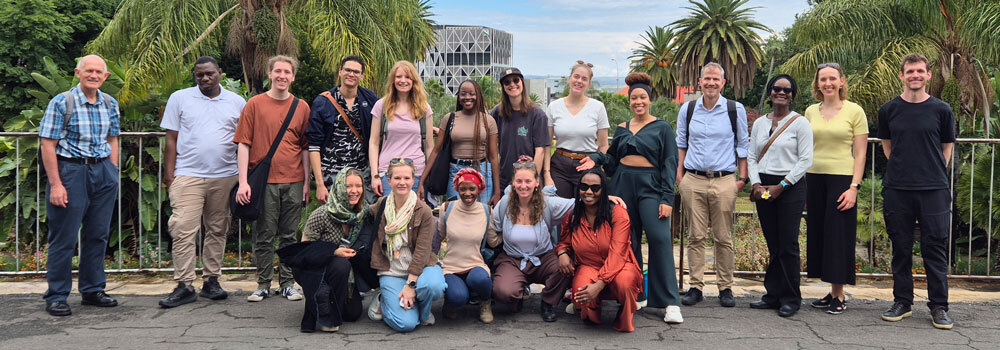 Foto: privat
Expanding international partnerships with African universities is an important goal of FernUniversität in Hagen. Since 2023, a mutual Memorandum of Understanding has formed the foundation for exchange between the University of Namibia (UNAM) and FernUniversität. As part of the DAAD-funded Psychology for Future project, an academic delegation from Hagen has now traveled once more to Windhoek: Rector Prof. Dr. Stefan Stürmer, PD Dr. Laura Froehlich, Dr. Johanna Werner, Dr. Jan-Bennet Voltmer, and six FernUniversität students.
“We held the Psychology for Future Week in Namibia for the second time, building on the successful pilot in 2025 and earlier fact-finding missions in previous years,” explains psychologist Johanna Werner.
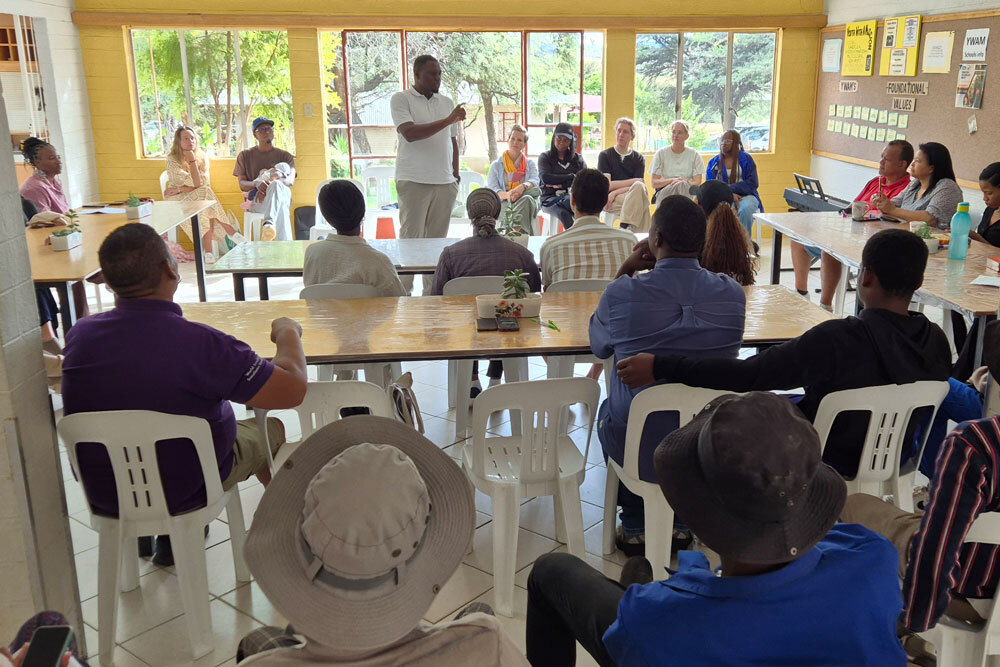 Foto: privat
Working on Joint Initiatives
At the heart of the visit was collaboration between the two institutions in teaching and research. During a joint meeting, FernUniversität Rector Stefan Stürmer and UNAM Vice-Chancellor Kenneth Matengo reaffirmed their commitment to bringing the shared Memorandum of Understanding to life. “Both universities have a strong interest in maintaining and further strengthening the cooperation beyond the DAAD project’s funding period,” emphasizes Voltmer.
Laura Fröhlich, Johanna Werner, and Jan-Bennet Voltmer worked on site with UNAM researchers Dr. Manfred Janik, Dr. Elizabeth Shino, Dr. Annelisa Murangi, and Dr. Clifford Hlatywayo. The basis for joint research—such as on the long-term consequences of COVID-19, sustainable nutrition, open access to educational opportunities, and the psychological impacts of climate change—is provided by the United Nations’ Sustainable Development Goals.
Student Participation and Local Networking
Students from both universities were always closely involved. Working in international teams, they contributed to joint projects, attended lectures, and practiced providing feedback. One of many highlights was a “community engagement workshop” with local volunteers. Here, participants were able to apply psychological knowledge in a real-world context. The focus was on psychological stress and coping strategies.
“The community engagement activities impressively demonstrated the high quality of training in our bachelor’s program in psychology—and also highlighted the strengths of our diverse student body,” summarizes Rector Prof. Dr. Stefan Stürmer.
Further perspectives emerged through contact with institutional partners in Windhoek, such as the Goethe-Institut. Topics of discussion included student mobility, the emigration of skilled professionals (“brain drain”), and career development opportunities, particularly in the fields of language education and international labor markets.
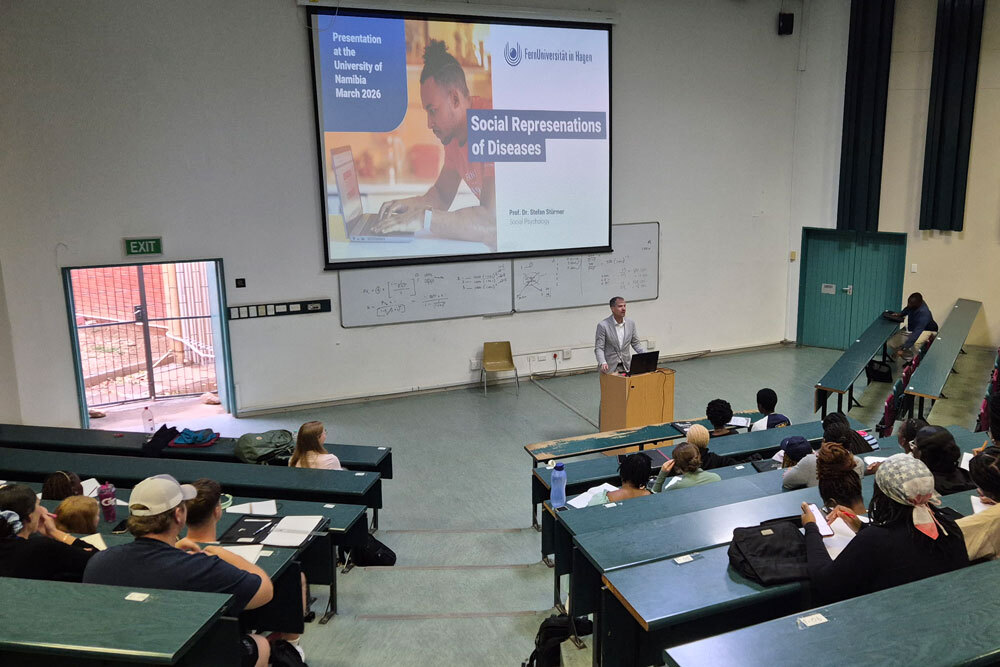 Foto: privat
Intertwined Histories
Jan-Bennet Voltmer gained additional insights by arriving several days earlier. “Together with my colleague Clifford Hlatywayo, I visited the city of Lüderitz.” At the beginning of the 20th century, the region—then colonized by Germany—gained prominence due to significant diamond discoveries. Today, two memorial stones on Shark Island commemorate the crimes of colonization against the Nama and Herero peoples.
Beyond this historical dimension, Lüderitz was also of interest for entirely different reasons. “At times, the city was considered a promising location for green hydrogen because of its abundant sun and wind,” says Voltmer. “We spoke with local people about the opportunities and risks associated with green hydrogen and the oil discoveries off the coast of Namibia.”
Learning about the Country and Its People
In general, it was important to the team to learn as much as possible about Namibia’s culture and society. In Windhoek, they visited many historically and culturally significant locations, including museums, townships, and art spaces.
“These experiences were fascinating for us,” explains Voltmer. “They deepened our understanding of the country’s social realities and history—essential contextual knowledge for culturally sensitive teaching and research.” For the researcher, one conclusion is clear: “With our visit, we have strengthened the common foundation. We are very much looking forward to a long-term, trusting collaboration.”


