


Social Psychology Well Represented at the EASP in Strasbourg
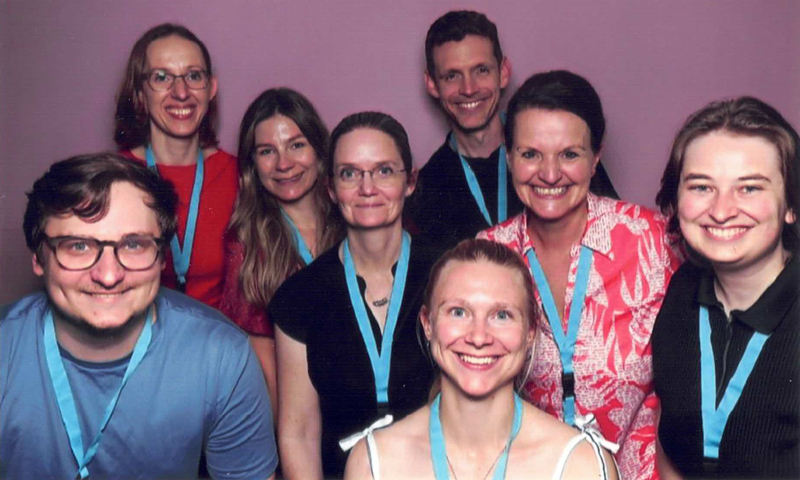 Photo: FernUniversität
The Department of Social Psychology at FernUniversität in Hagen presented a strong showing at the General Meeting of the European Association of Social Psychology (EASP) in Strasbourg (June 30–July 4, 2026): At Europe’s largest social psychology conference, the team was widely represented with presentations, symposia they organized or co-organized, and posters—covering topics ranging from intervention research to gender stereotypes to the “mental lab.”
A key focus was on gender, stereotypes, and choice of major. In the symposium “Perceptions, Persistence, and Pathways,” which PD Dr. Laura Froehlich co-organized, Jennifer Raimann highlighted backlash effects in the perceptions of STEM and HEE students, while Mai Grundmann outlined two pathways for fulfilling the basic psychological needs of women in STEM fields. Sören Michallek presented findings showing that it is not so much the situational threat to masculinity as the belief in “fragile” masculinity that predicts agreement with rape myths.
The unique teaching approach of the FernUniversität in Hagen was also a focal point: Dr. Nathalie Bick organized a symposium on social-psychological interventions in the European higher education context and presented an online belonging intervention designed to counter social identity threats in distance learning. Dr. Jan-Bennet Voltmer added another highlight by organizing the symposium “Invisible Work, Visible Consequences: Gendered Mental Labor in Families and Organizations” and presented his own findings on measuring mental labor in paid and unpaid work. In addition, there were two posters: one by Dr. Sybille Neji on emotions and expectations of success in collective climate action, and one by Jennifer Hochstein on stereotypes and diversity in computer-supported collaborative learning (CSCL) groups.
“I am very proud of our team. The breadth and quality of the presentations—ranging from intervention research to gender stereotypes to mental labor—show just how strong and diverse our field of social psychology has become on the international stage. I am particularly pleased with how confidently our early-career researchers presented themselves on this major stage.”
Content to follow
