


Kolloquium
- Thema:
- An Oral History of Double Displacement: The Story of Vilcha, a Ukrainian Settlement Displaced Twice
Der Vortrag findet auf Englisch statt. - Referent/-in:
- Viktoria Naumenko, Hagen
- Adresse:
- FernUniversität, Universitätsstraße 33, Gebäude 2, Raum 6
Sofern Sie an einer TN per Zoom interessiert sind, wenden Sie sich bitte an karin.gockel@fernuni-hagen.de - Termin:
- 01.12.2026 18:00 Uhr
The presentation focuses on the methodological potential of oral history as a source for studying the experience of double forced displacement. It addresses the specific challenges of working with the narratives of people who have survived both a man-made disaster and wartime violence: how interviews make it possible to reconstruct individual and collective survival strategies, trace the transformation of traumatic experiences over time, and identify the similarities and differences between migration caused by Chornobyl and migration resulting from war. The presentation considers oral history sources not only as a means of documenting events but also as a tool that requires a specific ethical and research-based approach.
The village of Vilcha in the northeastern part of Kharkiv Oblast is a unique site for studying forced resettlement: it was founded in 1992 as a new home for resettlers from the village of the same name, located 40 km from the Chornobyl Nuclear Power Plant in the mandatory evacuation zone. Between 1993 and 1996, approximately 2,000 former residents of Vilcha near Chornobyl received new housing in the Kharkiv region, where displaced persons from the Donetsk and Luhansk regions—which were occupied in 2014—later settled as well. After the start of the full-scale invasion, history repeated itself: the Russian occupation of 2022, subsequent hostilities, and the “scorched earth” tactics employed during the 2024 counteroffensive led to the destruction of the settlement and the evacuation of its last residents. Thus, for the second time in its history, Vilcha became a ghost town. The history of Vilcha offers a rare opportunity to observe two distinct experiences of forced displacement—one caused by industrial disaster and the other by war—within a single community.
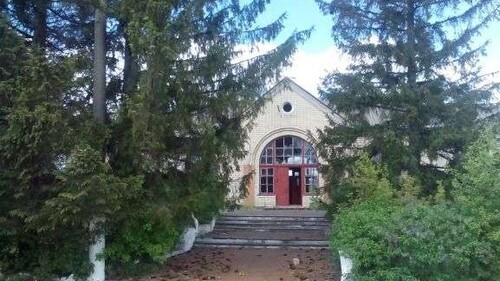 Foto: Naumenko

