


German-Polish Research Project Examines Attitudes Toward the Energy Transition
The project focuses on how people in Germany and Poland view the energy transition, and also what kind of role values (as well as trust/mistrust in the government) play.
 Photo: Robert Kneschke - stock.adobe.com
The energy transition concerns far more than simply technical innovations or economic decisions. It impacts social structures and prompts both individual and collective adaptation processes. With this in mind, the Department of Energy Economics at the FernUniversität in Hagen has initiated a new research project in cooperation with the University of Gdańsk. The project is funded by the German-Polish Science Foundation (DPWS).
Factors Influencing Social Acceptance
The project “Energy Transition and Society: Attitudes Toward the Energy Transition in the Context of Changing Values and Social Trust in Poland and Germany” focuses on the key factors influencing societal acceptance. The analysis examines value orientations, such as openness to change and the desire to preserve the status quo, as well as levels of trust in state institutions and the pervasiveness of conspiracy narratives. In addition, the team is carrying out research into how these factors influence commitment to the energy transition – for example, through individual behavior or support for policy measures.
Project Management and Team
The project is led by Jun.-Prof. Dr Michael Bucksteeg, Assistant Professor of Business Administration (specializing in energy economics), at the FernUniversität in Hagen, and Dr Anna Maria Nikodemska-Wołowik, Head of the Sustainable Market Processes Department at the University of Gdańsk.
Dr Stefan Poier, who completed his doctorate at the University of Gdańsk and is currently conducting research at the Department of Energy Economics in Hagen, is also closely involved. His focus areas include renewable energy, consumer behavior, and behavioral economics. “The energy transition is not exclusively an ‘environmental issue.’ It also has an economic impact,” explains Poier. “To begin with, the investment costs are high – but this can also present an opportunity for the economy. In the medium to long term, it can pay off for the public.”
A Focus on National Differences
The researchers expect to find significant differences between Germany and Poland. Specific working hypotheses are still being developed, but key influencing factors are already becoming apparent. “Socio-economic factors – such as income patterns, educational backgrounds and differences between urban and rural lifestyles – are all likely to play an important role,” said Michael Bucksteeg. In light of this, priorities regarding the energy transition may also differ: While environmental and climate protection issues often take center stage in Germany, the focus in Poland is more on economic development and people’s individual living conditions.
Historical factors also play a role. As Poier states: “Poland used to be part of the Eastern Bloc; today it is considered part of the West. There are indications of a different relationship between the individual and the state – above all, a greater mistrust of the state.”
When it comes to the debate on energy policy, various priorities are evident: In Poland, for example, the use of solar and wind power is growing rapidly, and nuclear power is considered far less controversial than in Germany. “Poland is shifting from coal to renewable energy and incorporating nuclear power,” Bucksteeg explains. “There isn’t just one single energy transition.”
Methodology: Quantitative National Comparisons
Around 1,000 people in each country are being surveyed as part of the empirical study. The standardized online surveys collect data on attitudes, value orientations and trust structures. In addition, the project team will be making use of extensive secondary data, including already established panel studies such as the European Social Survey. On this basis, the team will develop value profiles for both societies. At the same time, they are creating a project-specific questionnaire.
Exchange, Networking, and Support
The first online seminar for students has already been held in Gdańsk. “There are a lot of international students in Gdańsk who have contributed their own perspectives,” explains Stefan Poier. Exchange programs are planned for students at FernUniversität. They can also get involved in the project as part of their final-year projects.
Participants in this project are contributing to social science research into the energy transition and strengthening cooperation between the FernUniversität and the University of Gdańsk. Not only that, the project is laying the groundwork for a follow-up bilateral research program.
You might also be interested in...
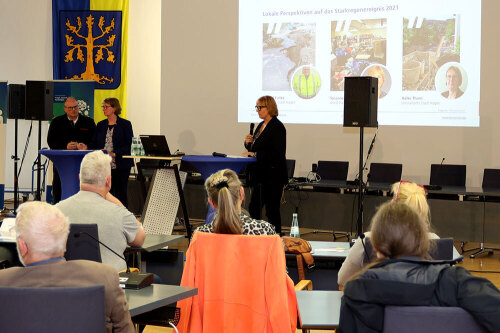 Photo: FernUniversität
Five Years After the Floods in Hagen
The lecture series “Energy, Environment & Sustainability” recently addressed a topic that is very close to Hagen’s heart: To this day, the 2021 flood continues to affect people in the region.
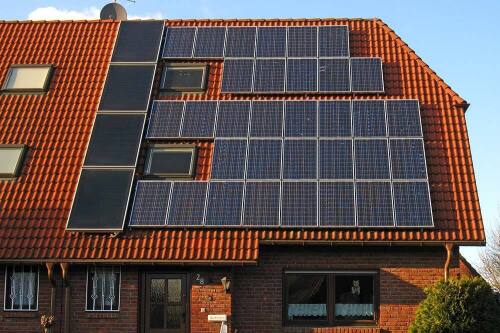 Photo: pics - stock.adobe.com
FernUniversität Study Published in “Nature Energy”
Assistant Professor Michael Bucksteeg and Mensur Delić have published a paper on the solar rebound effect in one of the most influential international journals in the energy sector.
 Photo: the_burtons/GettyImages
FernUni Special: Ideas for Tomorrow – Energy, Environment, and Sustainability
Climate change, the energy transition, sustainable living – these issues call for forward-looking ideas and solutions. The E/E/S research group brings together people who are working together to tackle these challenges.
