


Aktuelles
Belarus Colloquium: Knowledge Production vis à vis authoritarian rule
[29.06.2026]5.– 7. July 2026 in Hagen
In recent years, Belarus has become a site for examining the relationship between authoritarian power, violence, and knowledge production. Systematic repression against scholars, universities, and research institutions, alongside forced academic exile and the fragmentation of scholarly communities, has reshaped the conditions under which knowledge is produced, circulated and legitimized.
The 2026 edition of the Belarus colloquium focuses on the aftermath of violence and its long-term consequences for academic institutions, research practices, and epistemic communities. It seeks to examine how violence functions not only as a political instrument but also as an epistemic force that structures knowledge production inside Belarus and beyond.
By re-conceptualizing Belarus as the sum of interactions between the society inside and outside of the Republic of Belarus, the colloquium aims to contribute to comparative debates on the theory, methodology and ethics of studying divided societies, in contexts where direct access to the field is severely restricted or impossible due to political and ideological pressure.
We invite contributions from scholars in the social sciences and humanities, including but not limited to sociology, history, anthropology, political science, science and technology studies (STS), philosophy, and cultural studies.
Issues discussed involve:
- Regimes of violence and epistemic control: censorship, self-censorship, coercion, loyalty, and institutional control as mechanisms of epistemic exclusion, silencing, and marginalization.
- Repressive histories of science and scholarship in Belarus and contemporary repression against academic institutions and researchers.
- Aftermath of violence: studying the long-term consequences of repression for academic fields, institutions, and scholarly subjectivities.
- Methodology: how to conduct empirical research on Belarus when there is no access to the country, including forms of “research outside of institutions.”
- Knowledge production: science under authoritarianism and in exile, including resource asymmetries, epistemic divides, and the reconfiguration of academic authority in the diaspora.
The colloquium aims to foster a critical academic discussion on the entanglements of violence and knowledge production in authoritarian contexts, with particular attention to long-term effects of repression, methodological constraints, and the conditions of knowledge production in exile.
| Language(s) of conduct: | English / Belarusian |
| Date and format: | 5.–7. July 2026 in Hagen, offline only |
| Organisation: | Lehrgebiet Public History, FernUniversität in Hagen |
| Committee: | Dr. Aryna Dzmitryieva, Dr. Olga Shparaga, Aliaksei Bratachkin, Gundula Pohl, Prof. Dr. Felix Ackermann |
| Contact: | Dr. Aryna Dzmitryieva, aryna.dzmitryieva |
| Partner: | Akno Science at Risk, Osteuropakolleg NRW Akno Scholars for Belarus e.V., Fakultät für Kultur- und Sozialwissenschaften |
| Flyer: | Program Belarus Colloquium |
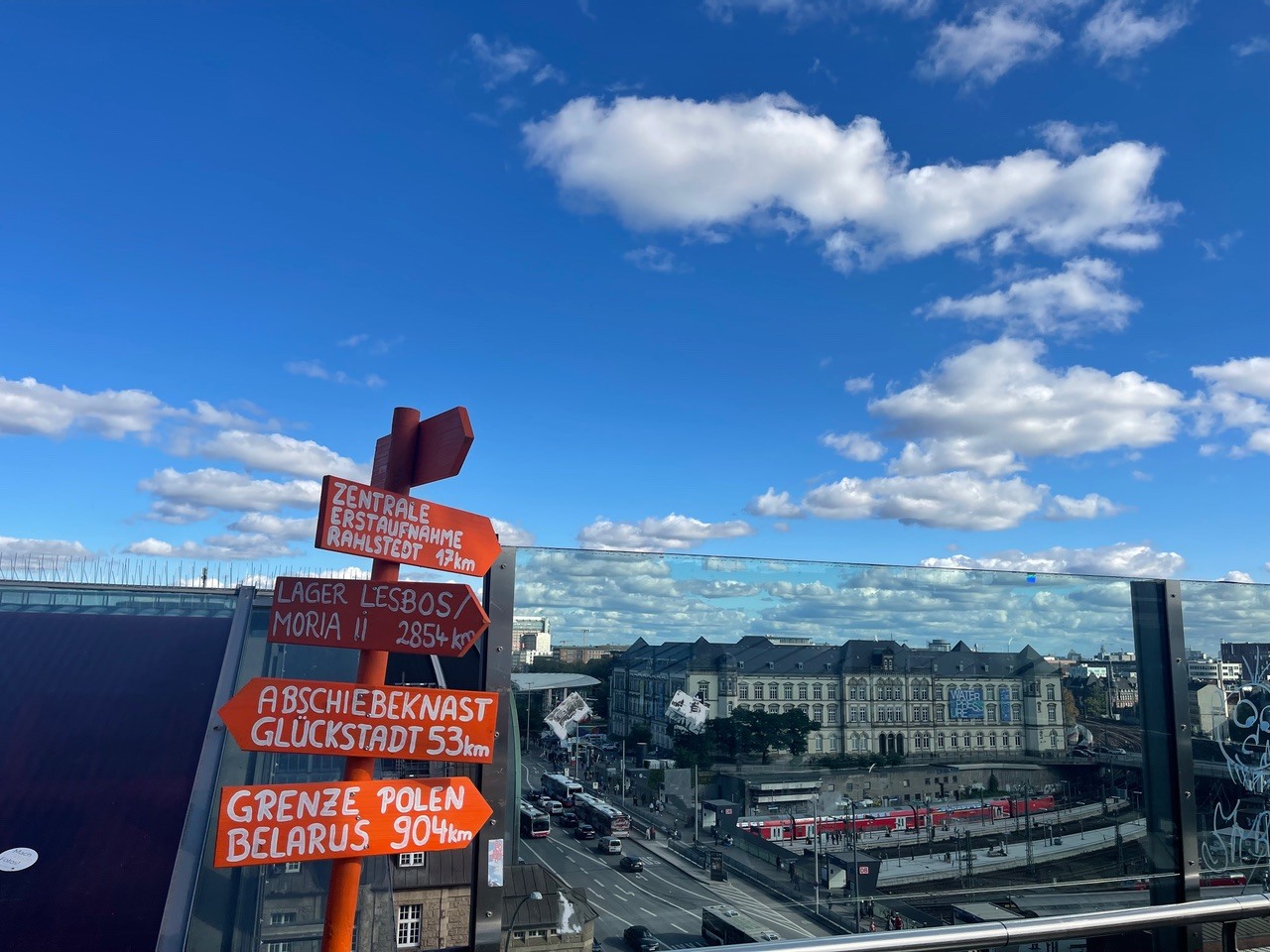 Foto: Felix Ackermann


