


Projekt
Zweifache Vertreibung: Eine Oral History der Umsiedlung der Einwohner des Dorfs Vil´cha
- Projektleitung:
- Dr. Viktoria Naumenko
- Status:
- laufend
- Laufzeit:
- December 2024-2028
- fördernde Einrichtungen:
-
This project has received funding through the MSCA4Ukraine project, which is funded by the European Union. Views and opinions expressed are however those of the author(s) only and do not necessarily reflect those of the European Union, the European Research Executive Agency or the MSCA4Ukraine Consortium. Neither the European Union nor the European Research Executive Agency, nor the MSCA4Ukraine Consortium as a whole nor any individual member institutions of the MSCA4Ukraine Consortium can be held responsible for them.
im Rahmen der Marie Skłodowska Curie-Maßnahme MSCA4Ukraine
Further information:
Vilcha – pereselene selo / pid redakcijeju G. Grinchenko, V. Naumenko, S. Telukha. Kharkiv: Madrid, 2018 [Vilcha – a Resettled Village / edited by G. Grinchenko, V. Naumenko, S. Telukha. Kharkiv: “Printing house Madrid”, 2018] [Link]
Student’s docufilm Vilcha a Resettled Village [Link]
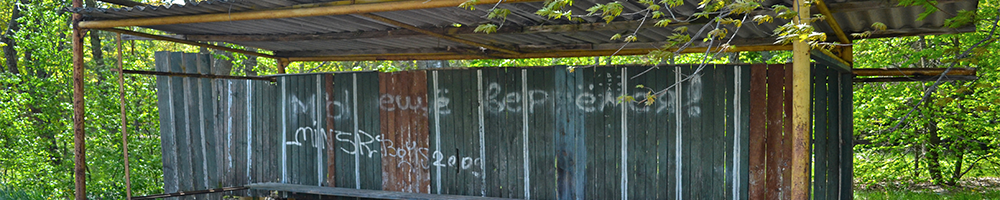 Foto: Nadiia Velychko
A Short History of Double Displacement: The Consequences of the Chornobyl Disaster and Russia’s War against Ukraine for the Resettled Inhabitants of Vilcha
The accident at the Chornobyl nuclear power plant in 1986 forced long-term resettlement of several hundred thousand people from the contaminated areas in Ukraine. Within the unconditional resettlement zone in the Kyiv region was located a village Vilcha. Between 1993 and 1996, most of its residents moved to a newly created village with the same name in the Kharkiv region, 11 kilometers from the Russian border. As of the beginning of Russia’s full-scale invasion of Ukraine, Vilcha was home to approximately 1,800 people, of whom about 70 percent were internally displaced persons from the Chornobyl zone and their descendants. Vilcha survived 6 months of Russian occupation in 2022, but did not survive the new Russian offensive in the spring of 2024. As a result of the Russo-Ukrainian war the Vilcha’s population was forced to leave their homes for the second time. Today the village has turned into a ghost town, as its predecessor in the Chornobyl zone did 30 years earlier. Dr. Viktoria Naumenko aims to document the experience of twice-forcibly displaced Ukrainian citizens based on the case of Vilcha residents. Through recording oral history interviews with these twice-displaced people she seeks to analyze the impact of displacements caused by man-made disasters on the residents, their survival strategies, and the implications of forced migration in the 21st century.


