


News
Advisory Board Recognizes CATALPA’s Impressive Progress
[21.06.2026]What scientific advances have been made at CATALPA? What research topics and methods are currently being focused on? The international Scientific Advisory Board recently gathered information on these topics.
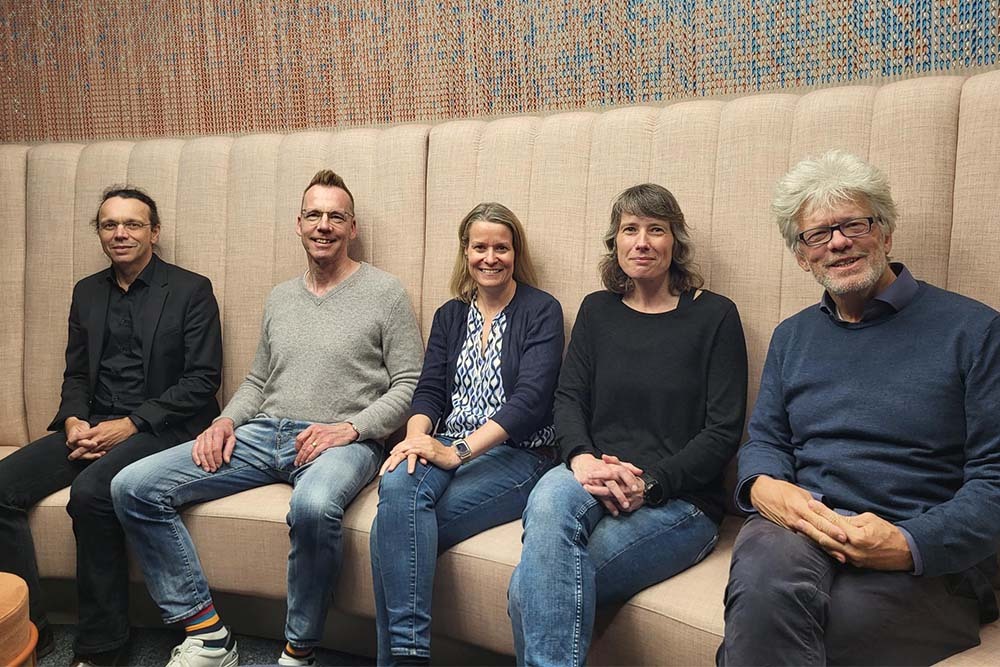 Photo: CATALPA
"It’s impressive how CATALPA has developed," said Prof. Dr. Tamara van Gog, the new chair of the advisory board. The recent visit focused on learning engineering.
Learning Engineering in the Living Lab aka Reallabor
Learning engineering combines interdisciplinary insights from the learning sciences with human-centered design methods to develop educational technology through iterative processes, from the first prototype to a scalable solution. "That is our methodology in the CATALPA Reallabor," explained Prof. Dr. Marcus Specht, CATALPA’s Scientific Director since early 2026.
The advisory board received a tour of four different labs, each with projects at various stages of the development process:
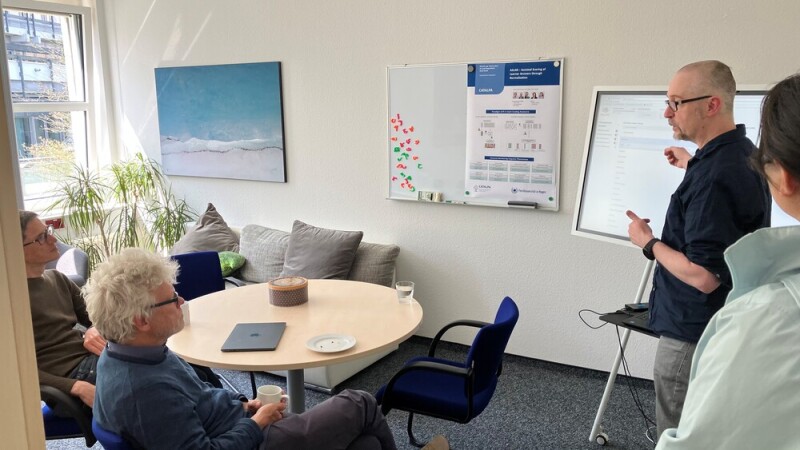 Photo: CATALPA
ASLAN, short for Assisted Scoring of Learner Answers through Normalization
This DFG-funded project aims to simplify assessments. To achieve this, learners’ answers are normalized using computational linguistics. This is intended to speed up and facilitate the grading process.
MoLA, short for Moodle Learning Analytics Workbench
MoLA is a Markdown-based handbook for learning analytics, presenting a variety of indicators based on Moodle data and informed Learning Analytics research.
Tutoring Lab for Flexible Learning Environments and Effective Tutoring Strategies
The team is investigating how to reduce the effort for creating digital learning environments and how to design effective and efficient multi-agent tutoring environments.
Co-Writing Lab – Scalable Collaborative Writing Environment for Large Cohorts
One of its goals is to support collaborative writing processes, both technically by providing various audio and video tools and pedagogically by providing a specialized conversational agent.
 Photo: Private
You can see a strong commitment to CATALPA as a whole, including among the younger researchers.
Prof. Dr. Tamara van Gog, Member of Scientific Advisory Board
Successful Leadership Transition at CATALPA
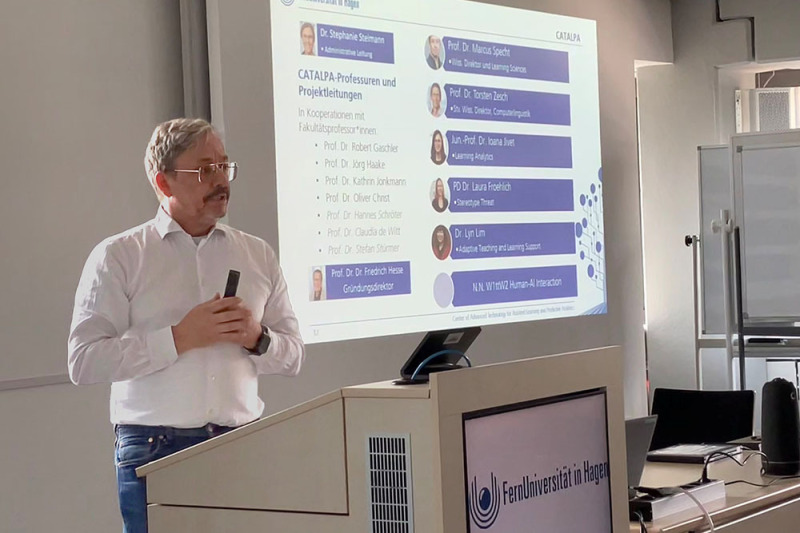 Photo: CATALPA
The advisory board appreciated the insight into day-to-day research activities. "You can see a strong commitment to CATALPA as a whole, including among the younger researchers," emphasized Tamara van Gog. The transition in the Scientific Directorate from founding director Prof. Dr. Dr. Friedrich W. Hesse to Marcus Specht was also very successful, she said.
The task now is to further refine the shared vision for CATALPA to fully realize the research center’s potential.
