News
Berlin Symposium: AI Solutions for Tomorrow's Higher Education
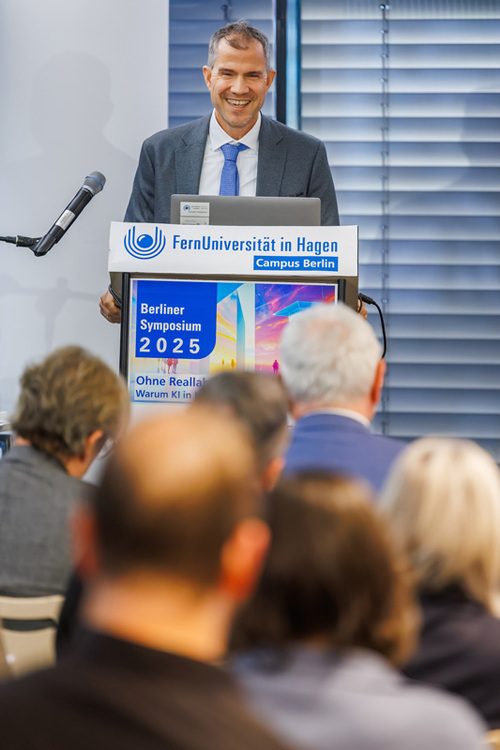
[27.11.2025]"No Progress Without Living Labs: Why AI in Universities Is Running Into a Dead End" - This was the title of the 2025 Berlin Symposium, organized by the CATALPA research center.
 Photo: Thomas Rosenthal
"AI and other educational technologies offer many opportunities. However, there is often a lack of clarity about what is meaningful from a didactic perspective,” said Prof. Dr. Dr. Friedrich W. Hesse, Scientific Director of CATALPA. The Berlin symposium began with this issue, and participants from science, politics, and higher education discussed possible solutions.
The event revealed that numerous uncertainties remain among university management, educators, teachers, and students. However, "trial and error" should not be the guiding principle for AI and other educational technologies, Prof. Dr. Marcus Specht explained in his keynote speech. He is the CATALPA Research Professor of Learning Sciences in Higher Education. "The prerequisite for use must always be scientific evidence that an application is effective."
Interdisciplinary research, such as that conducted by the CATALPA research center — the Center of Advanced Technology for Assisted Learning and Predictive Analytics — makes this possible. Around 60 researchers from psychology, computer science, education, computational linguistics, and sociology collaborate here to develop solutions for tomorrow's higher education. CATALPA calls its approach "research from the living lab."
Learning Engineering – From Prototypes to Regular Operation
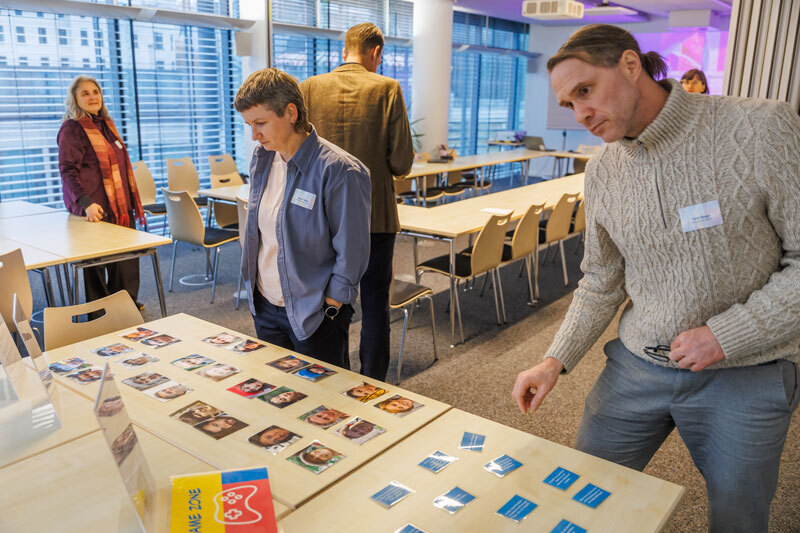
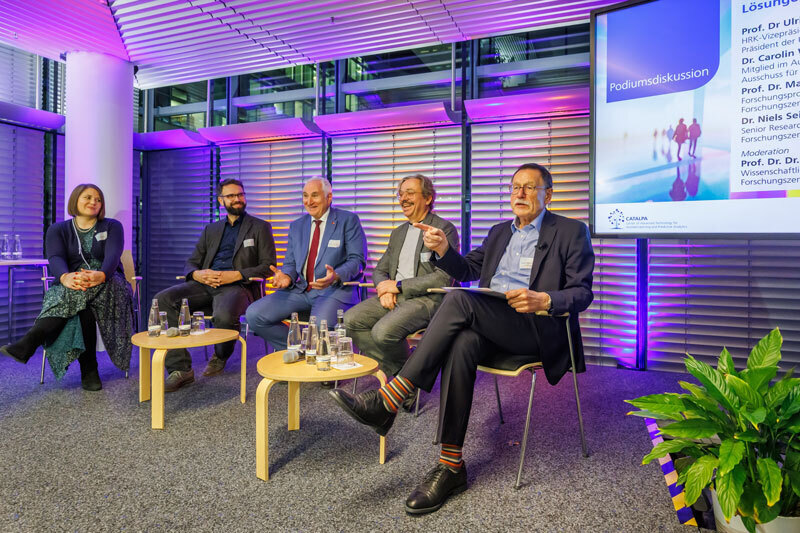 Photo gallery
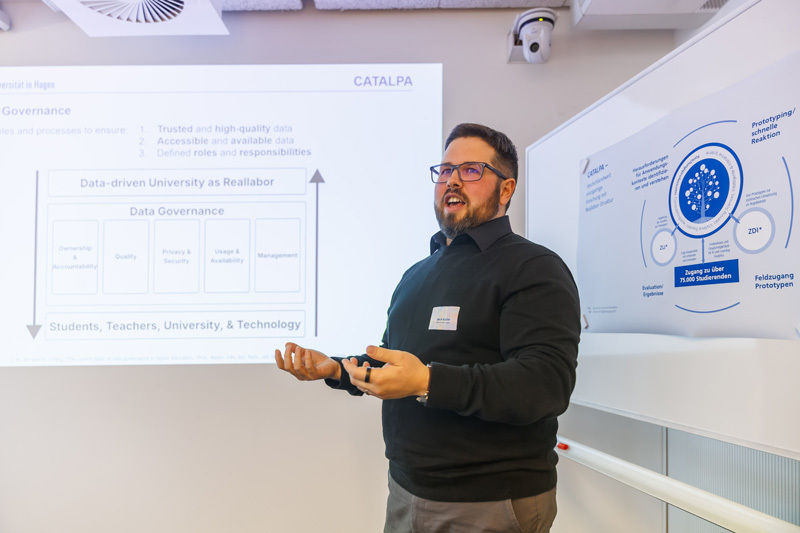
"Our research is based on the principles of learning engineering," explained Marcus Specht. This means that CATALPA conducts interdisciplinary research into the effects and potential of AI in a protected environment. Proven prototypes are ultimately transferred to regular operation at FernUniversität, which has around 80,000 students, following iterative processes.
According to President Prof. Dr. Stefan Stürmer, FernUniversität is the ideal location for such an interdisciplinary research center. "As a digital university, our students leave behind numerous data traces during the learning process. We can use this data to provide personalized support for students' learning progress." To enable the structured analysis of pseudonymized learning data, FernUniversität implemented a learning analytics policy some time ago.
Framework Conditions for the Living Lab Approach
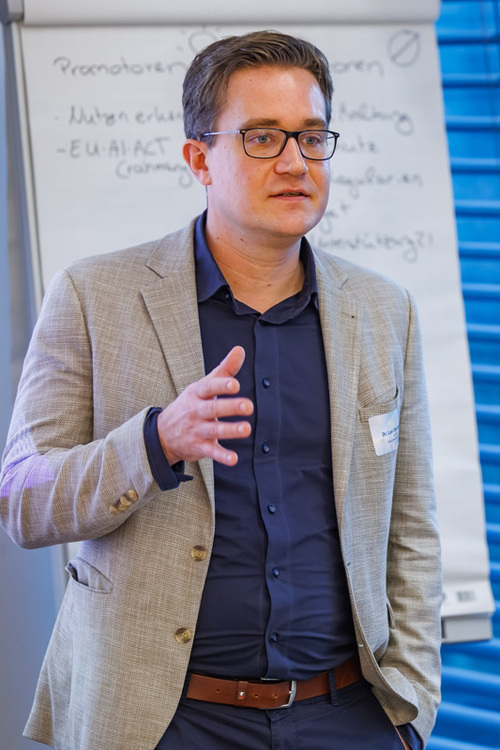
This was an important prerequisite for CATALPA's research. In several workshops, the research center identified the framework conditions necessary for implementing its living lab approach.
 Photo: Thomas Rosenthal
These include technical infrastructure, access to advanced analysis methods and AI, and extensive, multimodal data sets generated across semesters and disciplines. Finally, the research itself must be based on valid methods and a combination of approaches.
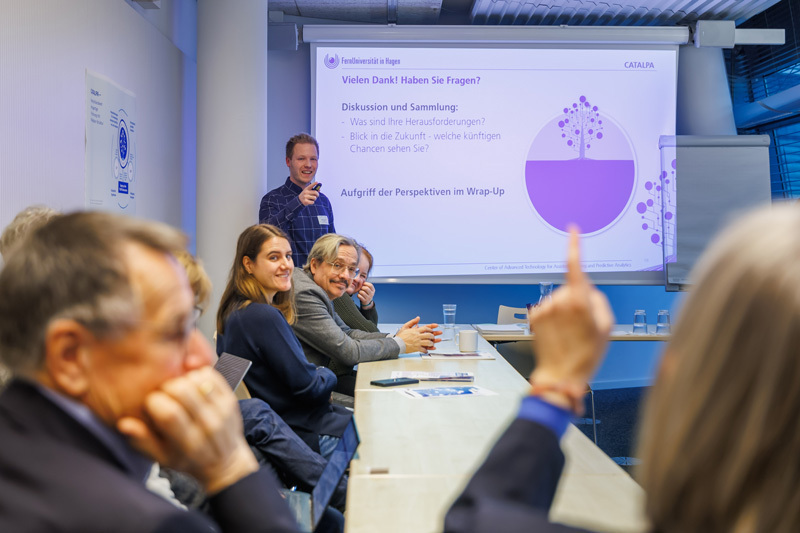
But what does this mean for the academic world as a whole? The workshop on "Conditions for Success and Social Relevance" explored this question. Uncertainty about AI as a disruptive technology was evident there. "Will traditional university professors eventually be eliminated?" asked one participant. Prof. Dr. Ulrich Bartosch, Vice President of the German Rectors' Conference for Teaching, Studies, and Teacher Training, addressed these concerns: “For an analysis of learning processes with AI and learning analytics to be possible at all, online processing must take place. However, learning also takes place in many other ways, such as through theater, experiments, or excursions.”
Smart Support for Learning Processes
Despite AI, we must not lose sight of these other learning methods, Bartosch explained in the concluding panel discussion. "But learning analytics already offers a wide range of opportunities for smart support of learning processes. Evidence-based feedback options, in particular, can be very helpful." Dr. Carolin Wagner, a member of the German Bundestag who sits on the Committees on Digital Affairs and State Modernization and on Research, Technology, Space, and Technology Assessment, emphasized the importance of data security in this context: "Education is essential for people's life paths," she said. "Learning data must be particularly well protected. The education sector is therefore also listed as a high-risk area in the European AI Regulation."
All participants in the discussion agreed on the importance of gaining more extensive and well-founded insights into the use of AI in higher education. According to Stefan Stürmer, this is particularly feasible in a living lab. "We need to evaluate the use of AI under controlled conditions in real teaching and learning scenarios," he said. "Meaningful use means a transformation process throughout the entire university."