News
From Vision to Impact: A Farewell to Prof. Dr. Dr. Friedrich W. Hesse
[09.10.2026]The CATALPA Research Center held a symposium to honor its founding director and look toward the future.
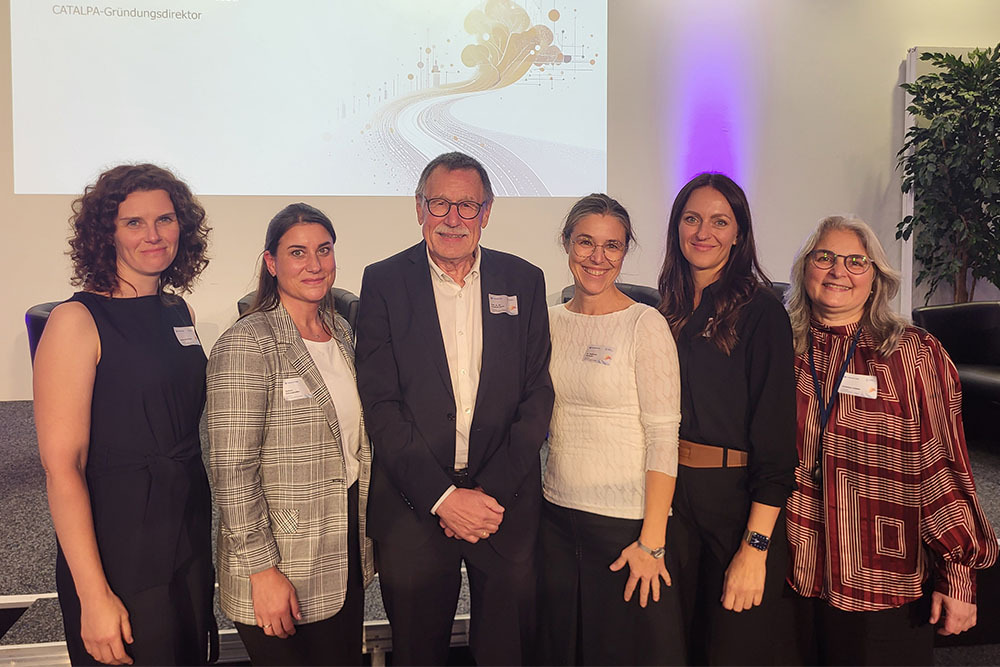
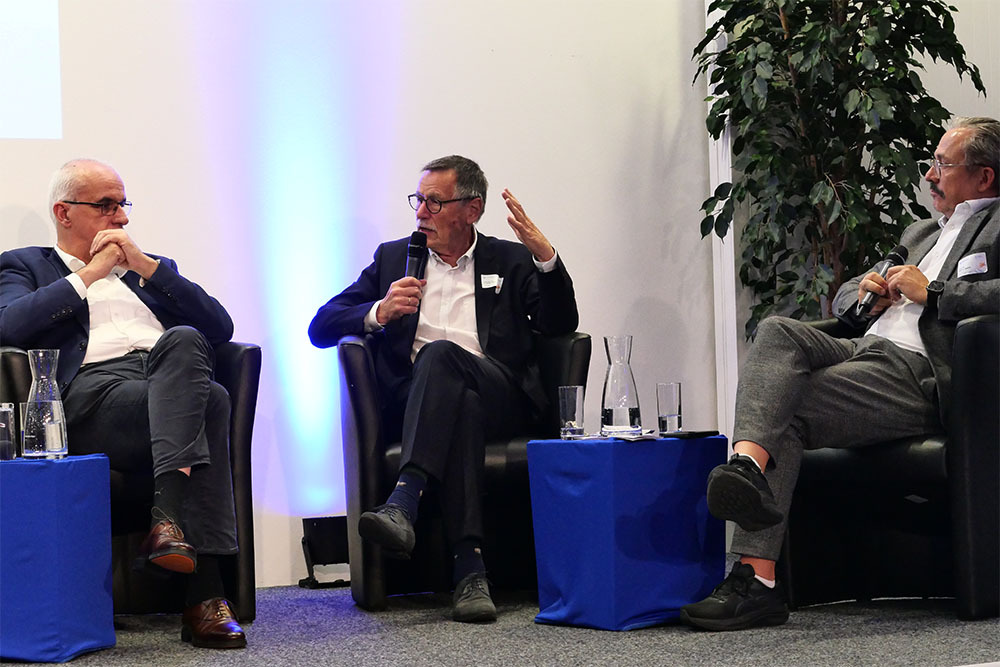 Photo: CATALPA
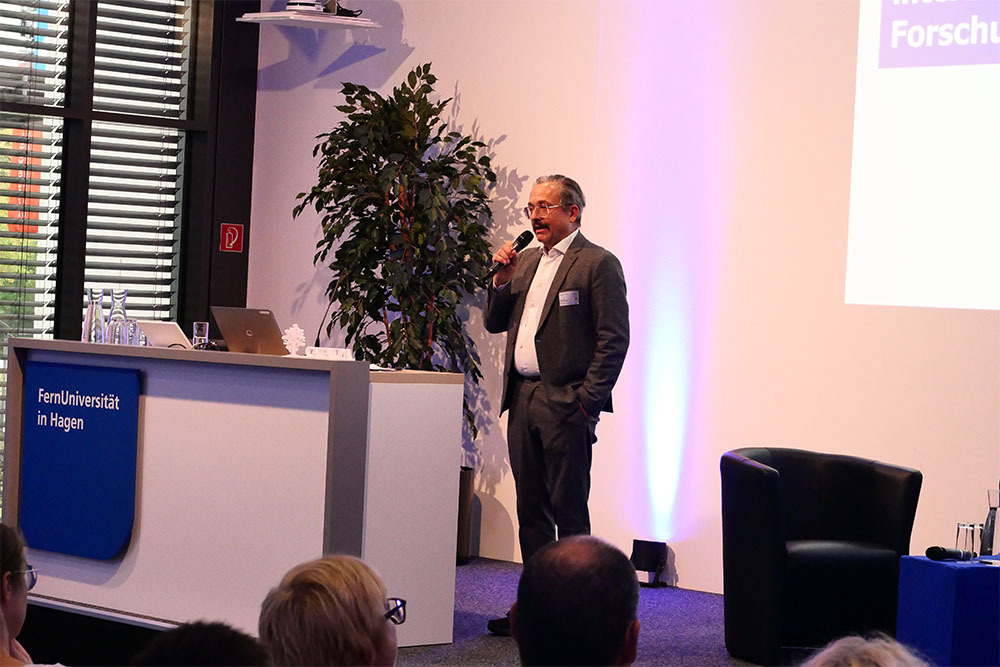
The CATALPA team took the guests on a journey through time: starting with the initial idea for an interdisciplinary research cluster that would address digitalization, diversity, and lifelong learning. All the way to the present day, with a clearly defined goal: “CATALPA researches and develops educational technology for better teaching and learning at universities,” said Scientific Director Prof. Dr. Marcus Specht, summarizing the institution’s mission and vision. “We are convinced that technologies in higher education can help people fully realize their possibilities and potential. But only if they are effectively designed and sensibly applied.”
Ina Brandes Commends Impressive Development
CATALPA’s focus and research achievements are well received: “An impressive development,” said North Rhine-Westphalia’s Minister of Science, Ina Brandes, in her video message to the center. According to FernUni President Prof. Dr. Stefan Stürmer, this development was decisively shaped by Friedrich W. Hesse, CATALPA’s long-time Scientific Director, through his foresight and determination.
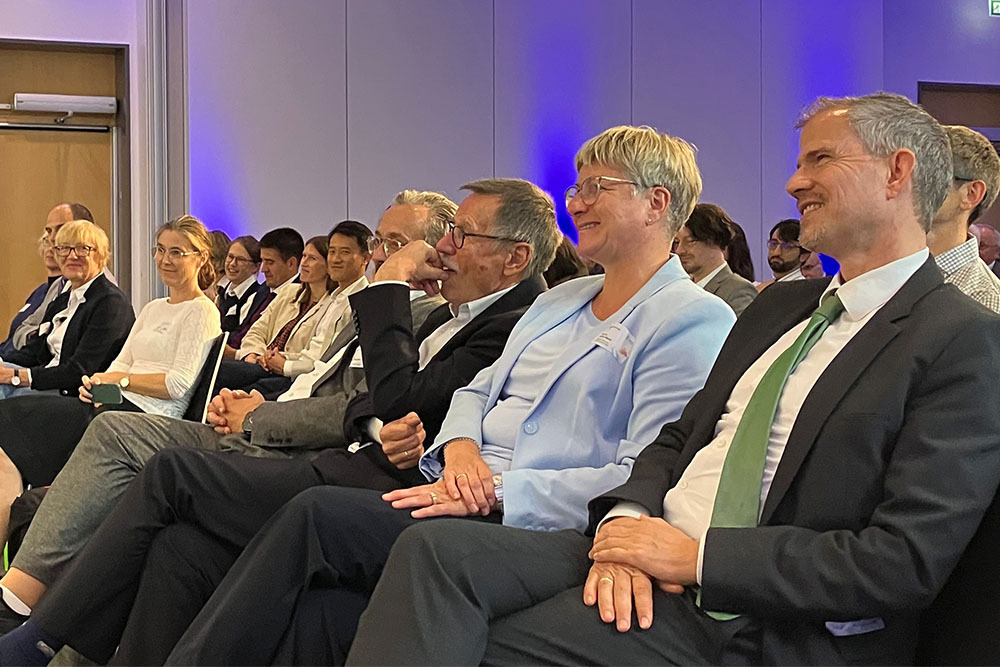 Photo gallery
Hesse explained that he had already had clear ideas for the institution during its founding phase. Influenced by his earlier experiences at Carnegie Mellon University, he wanted to bring together researchers with expertise in computer science and psychologists to conduct research on educational technologies. "My goal was to combine research at the very highest level with practical application."
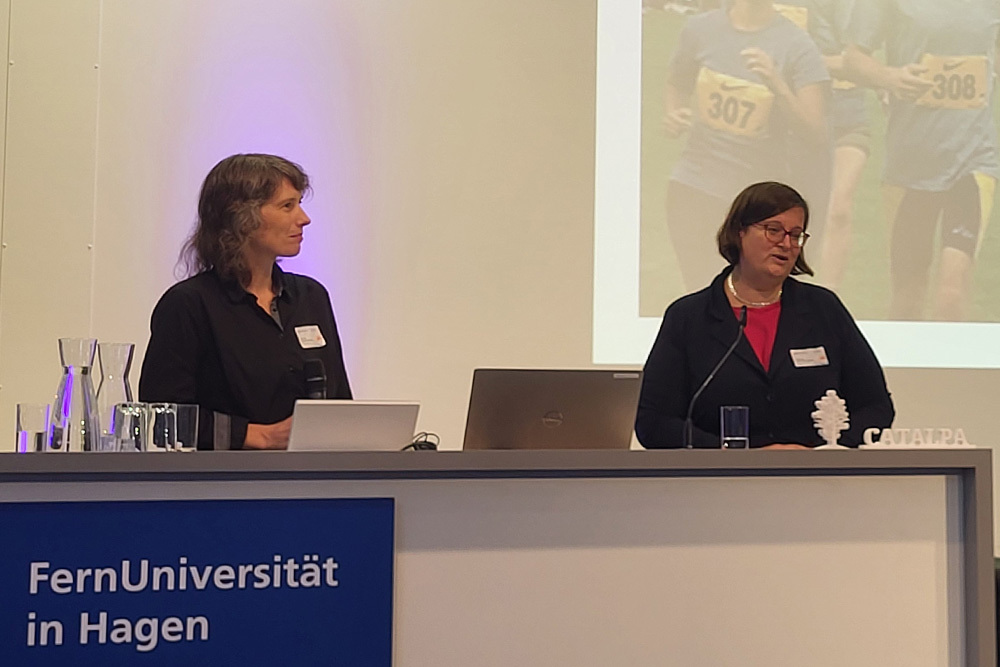
Involved from the very beginning: CATALPA Administrative Director Dr. Stephanie Steimann. "Right from the start, there was a vision that this could become a research institution of national significance for Germany," said she. she said. "After all, it was clear that the FernUni offered the best conditions for research.” Digital formats in teaching, a highly diverse student body, large groups in individual courses – and the university’s clear commitment to opening itself up to research in a living lab setting, with research conducted within actual teaching and learning environments.
Pioneering work for the real-world laboratory
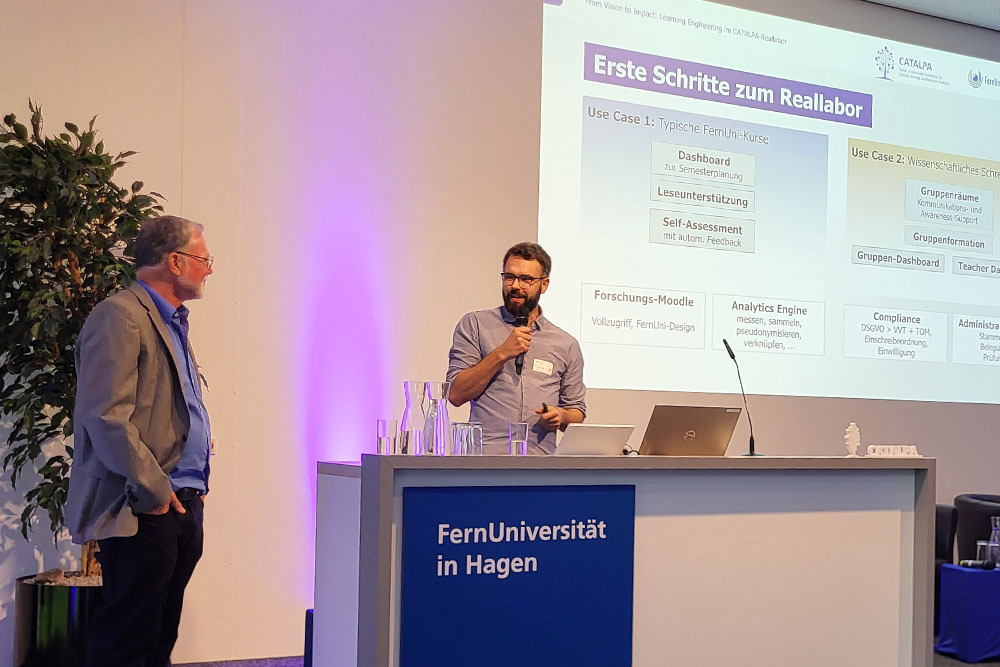 Photo gallery
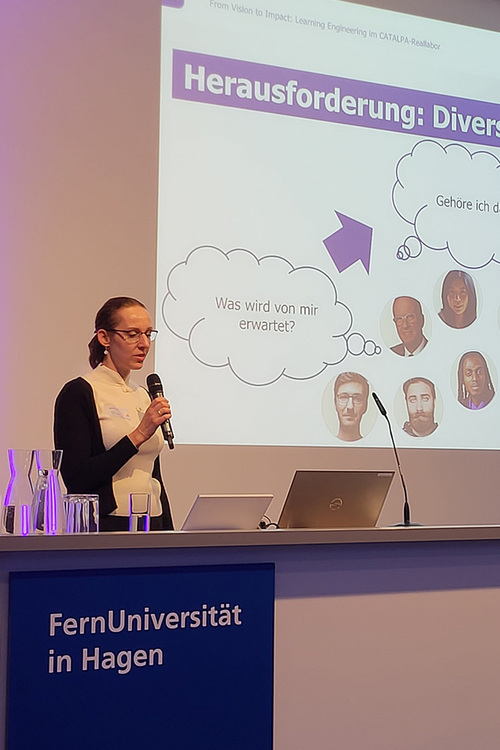
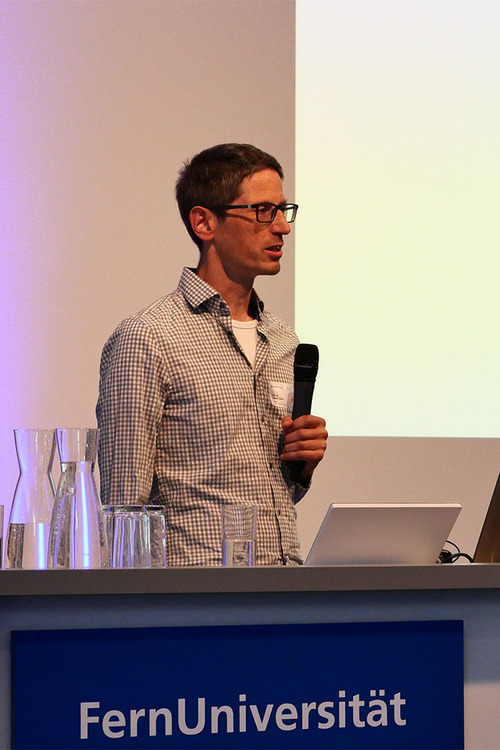
However, to make this possible, the first step was to establish the technical framework within the Moodle learning management system: “From an IT perspective, this was pioneering work,” reported Prof. Dr. Jörg Haake and Dr. Niels Seidel, who supervised two of the first projects. Projects that have since been participated in by 30,000 students. Haake and Seidel, for example, built an infrastructure that allows students to collaborate on texts. As the learners work together, they leave digital traces that enable researchers to draw conclusions about various research questions. "This allows us, for example, to analyze how students collaborate," explained social psychologist PD Dr. Laura Froehlich.
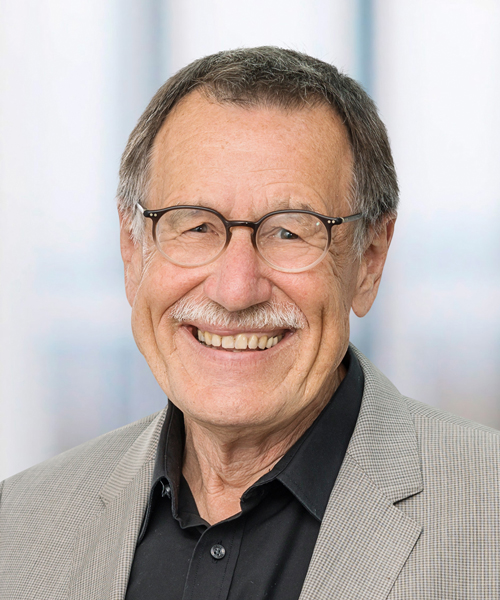 Photo: Henrik Schipper
Personal Details
From 2020 to 2025, Prof. Dr. Dr. Friedrich W. Hesse was Scientific Director of the CATALPA Research Center; before and after that, he served as a consultant to the center in his role as Founding Director. In establishing the institution, Hesse drew on Leibniz structures. He had already founded the Leibniz Institute for Knowledge Media (IWM) in 2001, and he also served as Vice President of the Leibniz Association from 2010 to 2018.
Interdisciplinary Research as a Major Advantage
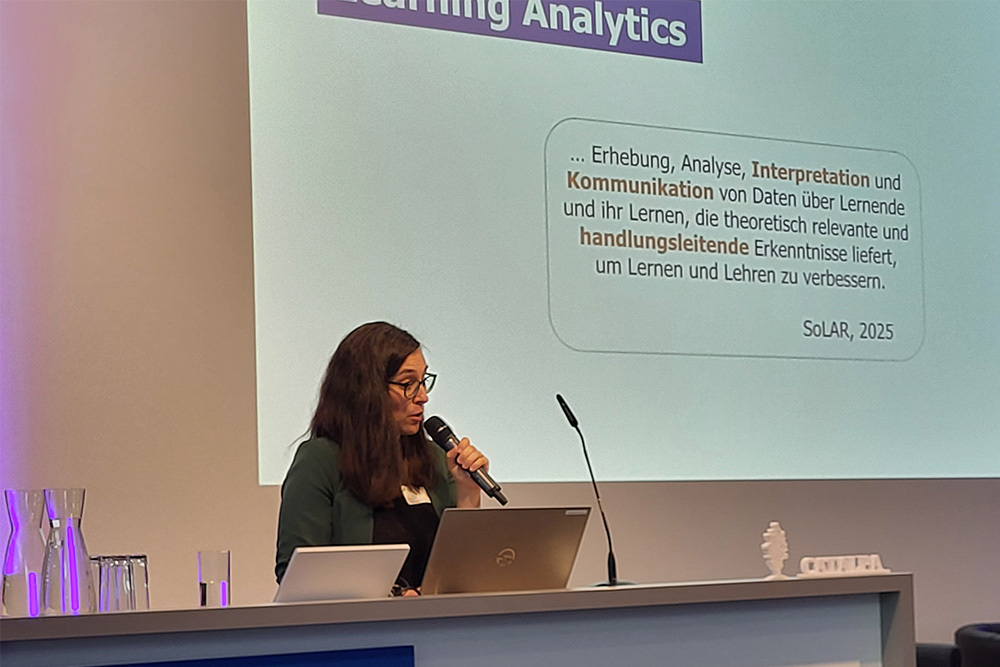
Research at CATALPA is consistently interdisciplinary. This is a major advantage, as the three CATALPA research professors – Prof. Dr. Torsten Zesch, Jun.-Prof. Dr. Ioana Jivet, and Prof. Dr. Marcus Specht – unanimously explained. “Even I, as a computer scientist and computational linguist, eventually realized that technology alone isn’t enough to change the world,” Zesch explained with a wink. Thanks to the framework provided by CATALPA, “we can transform scientific output into practical impact.”
Within this framework, the FernUni, as an institution, also makes a decisive contribution – for example, through its Learning Analytics Policy – noted CATALPA Advisory Board member Prof. Dr. Tamara van Gog of Utrecht University. This creates an ecosystem for researchers – one that is unique even from an international perspective – to address challenges related to educational technologies.
AI in Education Remains Challenging
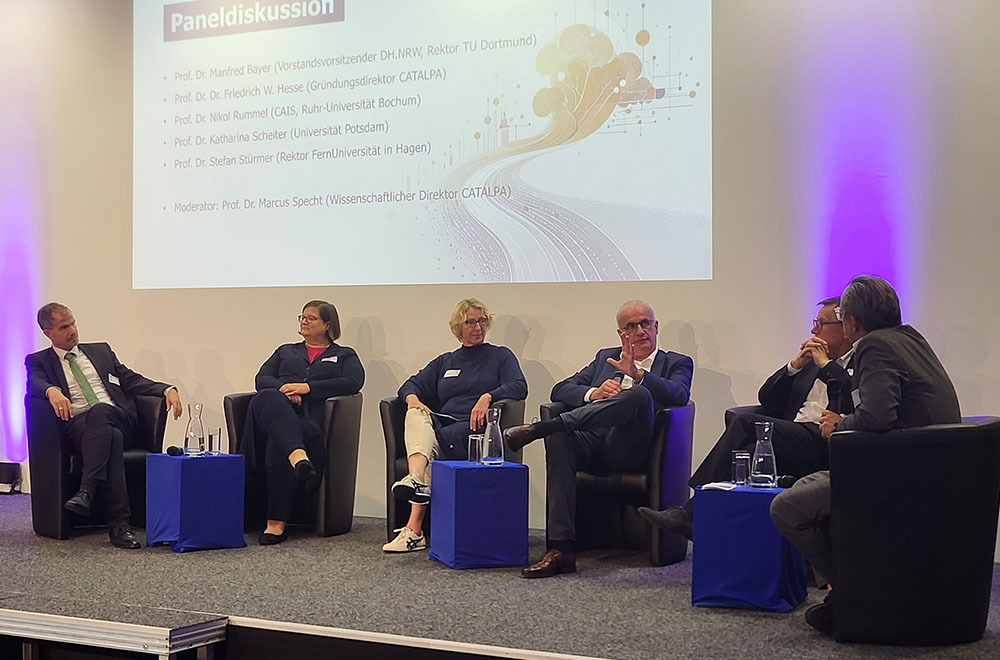
There is still too little meaningful, theory-building research, particularly on the topic of teaching and learning with AI, said Prof. Dr. Katharina Scheiter (University of Potsdam) during the panel discussion: "This is where CATALPA can make an important contribution." The topic remains challenging in everyday university life, explained Prof. Dr. Manfred Bayer, Chairman of the Board of Digitale Hochschule NRW and President of TU Dortmund. CAIS researcher Prof. Dr. Nikol Rummel also emphasized that the impact of AI on society and social structures is still far from being sufficiently researched.
Uncharted Territory Instead of Well-Trodden Paths
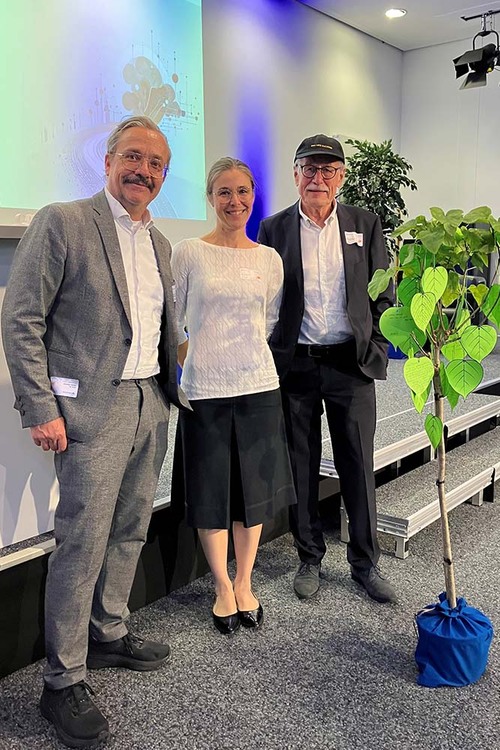
Prof. Dr. Dr. Friedrich W. Hesse certainly demonstrated foresight when he founded the research center, according to Katharina Scheiter and Tamara van Gog in their laudatory speech.
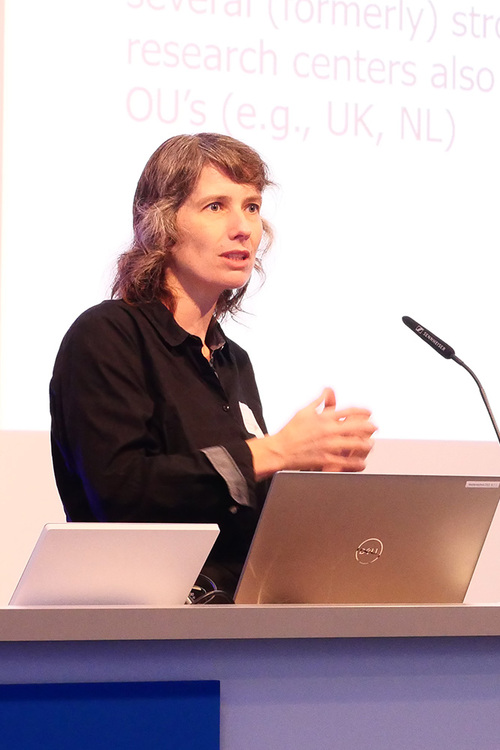 Photo: CATALPA
"He isn’t content to simply copy tried-and-true models – he’d rather break new ground and leave his own mark than follow well-trodden paths," Scheiter said. But, van Gog added, "he also always knows when it’s time to pass the baton."
This was also evident in CATALPA’s succession plan: Hesse had long planned to recruit former advisory board member Marcus Specht, first for a research professorship and then, starting in 2026, to succeed him as Scientific Director. Hesse and Specht worked hand in hand to manage the transition leading up to the farewell symposium.
"Continued Success"
"All that remains for me now is to wish CATALPA continued success," Hesse concluded. "But the odds are really good that it will achieve that."
- Profile Page: Prof. Dr. Dr. Friedrich W. Hesse | more
- Profile Page: Prof. Dr. Marcus Specht | more
- Event Schedule (German) | more