One year of OpenEU: consolidating the alliance
OpenEU, the alliance working towards the creation of the first European open university, held a coordination meeting in February in Lisbon, hosted by Universidade Aberta.
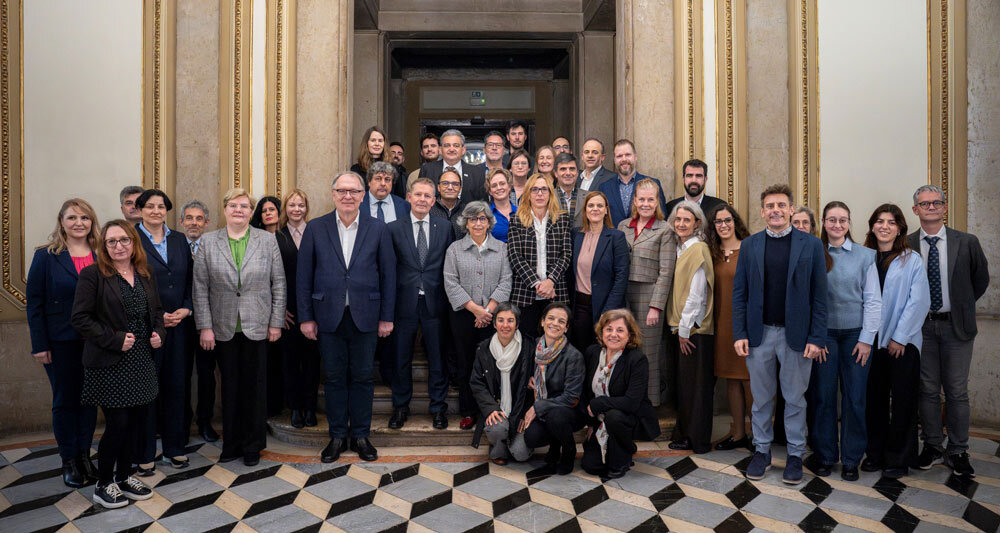 Foto: OpenEU/UAB
The meeting marked the conclusion of OpenEU’s first year and the start of its second work cycle, at a key moment for transforming European ambition into concrete impact.
Over two days, alliance partners reviewed the progress achieved during the first year and approved the work plan for year two. Discussions focused on moving from consolidation to delivery, with the shared goal of reinforcing the role of open and distance universities within the European Higher Education Area. This role is increasingly essential in responding to rising demand for flexible learning pathways, lifelong learning and continuous reskilling.
Solid bases for scaling up
During its first year, OpenEU established solid governance and coordination mechanisms across diverse institutional contexts and delivered a series of pilot initiatives. These achievements provide a strong basis for advancing towards large-scale implementation in its second year.
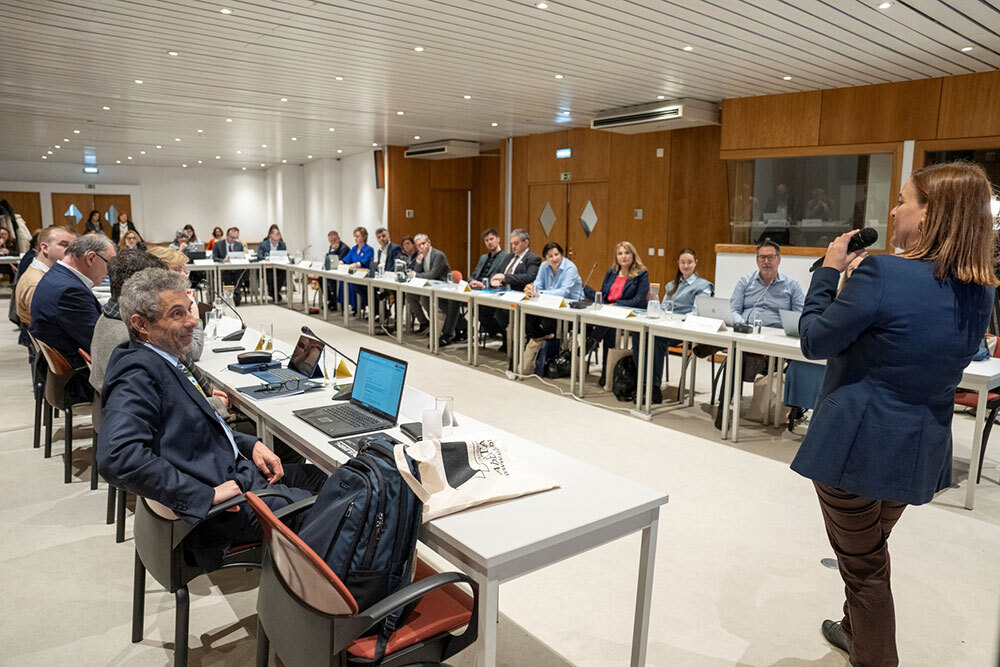 Foto: OpenEU/UAB
OpenEU’s selection as an Early Adopter of the European Higher Education Interoperability Framework (HEIF) has further strengthened the alliance’s visibility and strategic positioning at European level. As highlighted by Àngels Fitó, president of OpenEU and rector of the Universitat Oberta de Catalunya (UOC), OpenEU’s European ambition responds to a clear social need: ensuring access to high-quality, flexible and equitable higher education for learners at all stages of life.
After one year of consolidated progress, OpenEU enters its second phase with the aim of translating European cooperation into tangible opportunities for learners, staff and society.
Lisbon sets the direction for year two
Building on these foundations, the second work cycle launched in Lisbon aims to translate OpenEU’s collaborative scale into more visible opportunities for students, staff and society. Priorities for year two include enhanced mobility schemes, stronger links between skills development, employability and microcredentials, increased collaboration between academic communities, and the exploration of new shared initiatives such as an online employment fair and the alliance’s first joint bachelor’s programme.
Collaboration within the alliance will be further strengthened through five Staff Weeks planned for 2026, to be hosted at different OpenEU partner institutions, promoting staff mobility, peer learning and institutional alignment.
The long-term objective remains clear: to progress towards a pan-European open university capable of offering flexible and adaptable learning pathways that allow learners to access and advance in higher education without having to choose between education, work and everyday life.
